
Navigation
Install the app
How to install the app on iOS
Follow along with the video below to see how to install our site as a web app on your home screen.
Note: This feature may not be available in some browsers.
More options

You are using an out of date browser. It may not display this or other websites correctly.
You should upgrade or use an alternative browser.
You should upgrade or use an alternative browser.
Transforming an Rockbass Corvette 5 into ............ ?
- Thread starter AsturHero
- Start date


- Joined
- Sep 5, 2014
- Messages
- 470
- Reaction score
- 2
- Thread starter
- #22
Hi 
now holidays and time to continue my Vette
first of all:
can anybody measure from a 5 stringer the following distances in mm (for the "W"-Logo)?
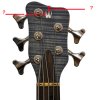
here the work for the Headstock:
first glueing and clamping
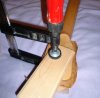
drilling and cutting the holes:
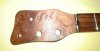
ready for oiling:
(there are some minidents during cutting around the holes, but there will be hidden from the tuners)
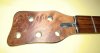
now holidays and time to continue my Vette
first of all:
can anybody measure from a 5 stringer the following distances in mm (for the "W"-Logo)?
here the work for the Headstock:
first glueing and clamping
drilling and cutting the holes:
ready for oiling:
(there are some minidents during cutting around the holes, but there will be hidden from the tuners)

- Joined
- Apr 12, 2011
- Messages
- 1,105
- Reaction score
- 0
Nice work so far

Nachobassman
Bass, Tapas, and Rn´R!
- Joined
- Jul 4, 2007
- Messages
- 8,232
- Reaction score
- 5,457
Hola,
Got the measures, but the side measure right over the A string tuner is difficult to get, so I took it from the other side. Hope this helps:
Top: 1,3 cm.
Right: 3,3 cm.
8:
(Bass: Infinity SN 5 from 2002. Ruler: normal, transparent plastic, 50 cm).
Got the measures, but the side measure right over the A string tuner is difficult to get, so I took it from the other side. Hope this helps:
Top: 1,3 cm.
Right: 3,3 cm.
8:
(Bass: Infinity SN 5 from 2002. Ruler: normal, transparent plastic, 50 cm).
- Joined
- Sep 5, 2014
- Messages
- 470
- Reaction score
- 2
- Thread starter
- #25
muchas gracias mi amigo Nacho
the most important measure was from the top
the rest is roundly the middle of the headstock, because its centered.
Tomorrow it's time to glue the "W"
because the one or two last oil coats gets over the logo.
the most important measure was from the top
the rest is roundly the middle of the headstock, because its centered.
Tomorrow it's time to glue the "W"
because the one or two last oil coats gets over the logo.
Nachobassman
Bass, Tapas, and Rn´R!
- Joined
- Jul 4, 2007
- Messages
- 8,232
- Reaction score
- 5,457
De nada, amigo. Está quedando DPM.
- Joined
- Sep 5, 2014
- Messages
- 470
- Reaction score
- 2
- Thread starter
- #27
next day, good process
all glossy clear coat gone.
Now i know, how the transtint glossy finish is made from Warwick/Rockbass
1. Body is non stained, all natural
2. a thick coat of translucent clearcoat
3. a very thin glossy coat of colored glossy poly (in my case the so called Honey Violin color)
3. thickness about 0,8 mm !!!!!!!!
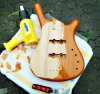
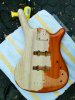
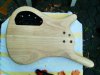
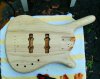
This is all color chips from one body..unbelievable how much it is.

it reveals a very beauty grain for Alder, so i have all possiblilities for continue
all glossy clear coat gone.
Now i know, how the transtint glossy finish is made from Warwick/Rockbass
1. Body is non stained, all natural
2. a thick coat of translucent clearcoat
3. a very thin glossy coat of colored glossy poly (in my case the so called Honey Violin color)
3. thickness about 0,8 mm !!!!!!!!
This is all color chips from one body..unbelievable how much it is.
it reveals a very beauty grain for Alder, so i have all possiblilities for continue

Augie
The Desert Bass-ape
- Joined
- Mar 11, 2010
- Messages
- 2,225
- Reaction score
- 203
Im amazed the colour came off so well! and that they use what appears to be a bookmatched two piece body. most cheap basses I have seen have three piece bodies, looks worse, has more seams but is cheaper to make.
This looks like itwill be nice as hell when its done!
This looks like itwill be nice as hell when its done!

schlobodan
Warwick Streamer Specialist
- Joined
- Feb 7, 2007
- Messages
- 4,750
- Reaction score
- 651
grain looks ashy - cool!
- Joined
- Sep 5, 2014
- Messages
- 470
- Reaction score
- 2
- Thread starter
- #32
Thank you AUgie
Yes thats the miracle with a Heatgun and FAbric finished Guitar/BAsses.
ordinary sanding with a Sander or per Hand is very time consuming because of the thickness and bulletproof consistence of the Poly-Coat. WIth sanding you will spend many many hours to get rid of the Color.
With the Heatgun it took me total 2 Hours for both sides, without ellbow grease or aching arms.
Only the parts with the rounded surface, like the 2 Horns are treated a little carefullier, to not chip out any wood
Yes thats the miracle with a Heatgun and FAbric finished Guitar/BAsses.
ordinary sanding with a Sander or per Hand is very time consuming because of the thickness and bulletproof consistence of the Poly-Coat. WIth sanding you will spend many many hours to get rid of the Color.
With the Heatgun it took me total 2 Hours for both sides, without ellbow grease or aching arms.
Only the parts with the rounded surface, like the 2 Horns are treated a little carefullier, to not chip out any wood
- Joined
- Sep 5, 2014
- Messages
- 470
- Reaction score
- 2
- Thread starter
- #33
next Step:
texturing the Body via wire-Wheel and a electric drill.
I'am very satisfied with the result, the grain pops out much more and now the surface has an 3D relief.
Now the saddest part:
sanding with different grids for prepairing to staining. Inbetween the sanding always moisturing the wood for raising broken wood parts.
As always: wear protective glasses and airfilter mask, because of wood-Dust and debris
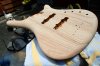
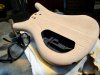
texturing the Body via wire-Wheel and a electric drill.
I'am very satisfied with the result, the grain pops out much more and now the surface has an 3D relief.
Now the saddest part:
sanding with different grids for prepairing to staining. Inbetween the sanding always moisturing the wood for raising broken wood parts.
As always: wear protective glasses and airfilter mask, because of wood-Dust and debris
- Joined
- Sep 5, 2014
- Messages
- 470
- Reaction score
- 2
- Thread starter
- #35
the wire-wheel is only to sculp the surface (softer wood rasps easier then hard wood), but after the wire wheel, the complete surface is very rough, so sanding is to do AFTER the wire wheel.
ANd for good staining results it is a must to do various steps in sanding and in between the moisturing, in my case:
80 grid, 120 grid, 180 grid, 220 grid but sanding only with light force for not to erase the tales, made from the wire wheel
my stain is water based, so if you don't sand enough or correctly, after staining some splines can be raised up and make the surface rough..so you must sand once more and you destroy your stained surface
ANd for good staining results it is a must to do various steps in sanding and in between the moisturing, in my case:
80 grid, 120 grid, 180 grid, 220 grid but sanding only with light force for not to erase the tales, made from the wire wheel
my stain is water based, so if you don't sand enough or correctly, after staining some splines can be raised up and make the surface rough..so you must sand once more and you destroy your stained surface

- Joined
- Jan 9, 2014
- Messages
- 88
- Reaction score
- 20
I believe it's not necessary to moisture during the first (or two) steps in the beginning, because the grid is too big anyway.
Anyway, your work is impressive!
How i'd have loved to have a heat gun, when i changed the finish of my guitar!
Anyway, your work is impressive!
How i'd have loved to have a heat gun, when i changed the finish of my guitar!
- Joined
- Sep 5, 2014
- Messages
- 470
- Reaction score
- 2
- Thread starter
- #37
...the more i work with the wood i don't think it's Alder..it's more like Ash i believe.....sanding reveals patterns, that normally comes with ash and not alder...
strange, that a basic Rockbass from 2007 has Ash and not Alder like commom Vettes....hahahahaha
normally Alder is soft, but this wood is very hard during sanding
strange, that a basic Rockbass from 2007 has Ash and not Alder like commom Vettes....hahahahaha
normally Alder is soft, but this wood is very hard during sanding
- Joined
- Apr 12, 2011
- Messages
- 1,105
- Reaction score
- 0
If it is Swampash it should have hard/soft areas, if its is hard ash it will be more like the Dark Lord French Ash top.

Nachobassman
Bass, Tapas, and Rn´R!
- Joined
- Jul 4, 2007
- Messages
- 8,232
- Reaction score
- 5,457
It IS swamp ash.
I´m a creature from the swamps, I can recognize them from kms away.
I´m a creature from the swamps, I can recognize them from kms away.
