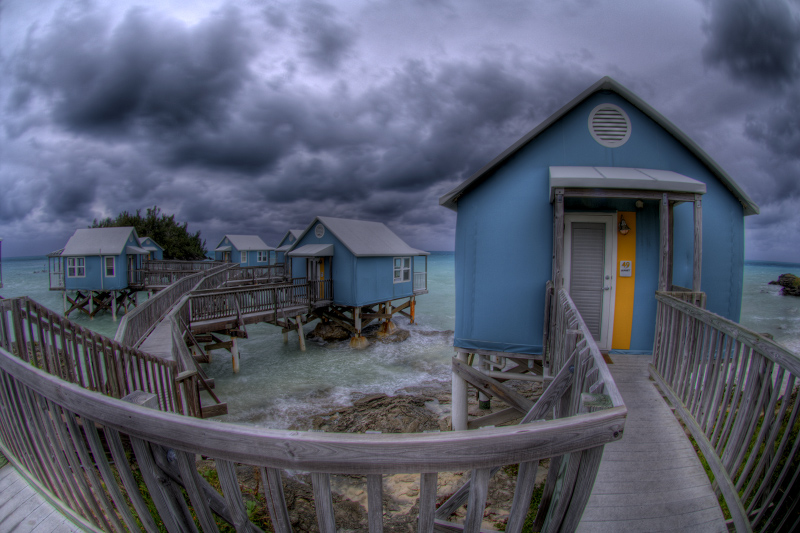
I don't want to be a buzz-kill, but those are not High Dynamic Range images. The key for an HDRI image is that there is detail in the shadows as well in the highlights which you cannot see in a normal picture, by (in the simplest form) merging an overexposed photo (which has a lot of shadow detail) with an underexposed one (which has a lot of highlight detail). If you look closely at the shadows on the mortars and the castle, you see you actually
lose detail in those places.
Which of course does not mean they are not pretty images, the effect however is not HDRI, but more of a 'high contrast, high saturation' type.
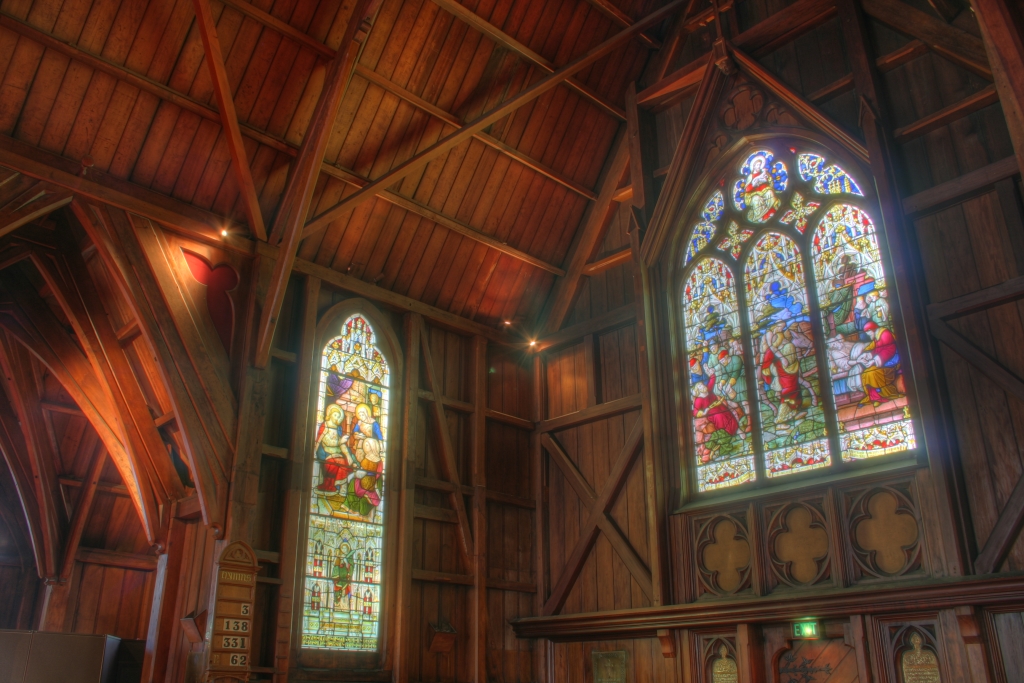
This is a good example of an HDR image, as anyone who has ever photographed a church window can tell you it has impossible amounts of detail in shadows (the walls) and highlights (the windows):
[Lecture-mode off]
Actually, we use a limited form of HDR imaging at Warwick for the instrument pictures where we have radically different woods (say ebony and maple as extremes) in one instrument. We take the underexposed (darker) version of the instrument and use the maple from that and splice in the ebony from an overexposed version of the image. This results in (again) more visible detail, wood-grain and bass-porn-factor

Thinking about this, I think I'll make a post in the nearish future detailing how we photograph our instruments, might be interesting?