
'Vette Question

Joined
Sep 15, 2015
Messages
11
Reaction score
4
I am new to the Warwick Corvette forum and have a couple of questions.

I purchased a 'Vette Standard two years ago from the original owner, who played it sparingly in his church worship band. He had several bass guitars and decided to sell his Warwick. I purchased it but my CNC business has not allowed me to dedicate the time to playing any instrument.

Not wanting it to collect dust, so to speak, I have decided to sell it. I came to this website after searching the serial number to get the specifications on my 'Vette Standard. The serial number does not match up with how the 'Vette is configured and I was wanting some insights as to why that might be.

For instance, the serial number ( G 136372 07 ) states that the 'Vette was built with Black hardware, but it actually has Chrome Warwick hardware. Could the previous owner ordered it with swapped out hardware and Warwick didn't update the database? Or could the previous owner gone to all the trouble of orderig replacement hardware and swapped it himself? I don't think the latter is the case, as the "Vette looks 100% unmolested and a full on swap out would have some indications.

I believe it is the German version and I am wanting to establish the selling price (USD) and want to make sure I represent it correctly, as I want potential buyers to be able to look up the serial number and not have any concerns.

The "Vette is as close to unused as you can get and is in pristine condition, so it has a lot going for it. I just need to represent it correctly.

Any help or assistance would be appreciated.

Dave

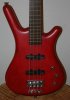
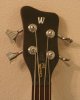
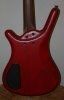
Warwick Corvette Standard 002.jpgWarwick Corvette Standard 006.jpgWarwick Corvette Standard 012.jpgWarwick Corvette Standard 014.jpgWarwick Corvette Standard 015.jpg
 
The previous owner more than likely did swap out the black hardware for chrome. It is a common occurrence and typically others would not know that the hardware was swapped out from a physical standpoint. I have seen these basses sell in the US around the $500-$800 price point depending on condition.

It looks to be in great shape.
 
Sippi,

Thanks, I was hoping it wouldn't be an issue. I feel fairly comfortable offering up the two possible explanations. Anyone in the guitar world should be comfortable with it... a novice on the other hand might not be.

The condition is an easy 10. Your price point range is where I figured it would settle in at.

Dave
 
It looks like the neck is held on with black screws but chrome bushings. This suggest the HW was swapped, and they forgot to get the chrome neck screws. Why anyone would go from chrome to black is beyond me, but a HW colour swap is no biggie in terms of value. Still an immaculate vette, which is not super common with the coloured satin finishes (or coloured oil as warwick mis-names them), as they tend to get little white crazing where they have been dented or scratched.
 
It looks like the neck is held on with black screws but chrome bushings. This suggest the HW was swapped, and they forgot to get the chrome neck screws. Why anyone would go from chrome to black is beyond me, but a HW colour swap is no biggie in terms of value. Still an immaculate vette, which is not super common with the coloured satin finishes (or coloured oil as warwick mis-names them), as they tend to get little white crazing where they have been dented or scratched.

Good catch, I would concur. It is immaculate. The Wenge finger board is one of the best i have seen... nice vertical grain. The same with the Ovangkol neck, all one piece, no lamination. The neck actually cools like quartersawn Black Walnut, nice vertical grain. The photos actually washed out the colors because I had to use a flash.

Sad to see it go, but it will be a few years before I get time to plan anything. My retirement went away and my CNC business has taken on a life all its own. Somewhere down the road, I may just build my own. I have the CNC files already and some Black Limba book matched blanks... so who knows, I might mix business with pleasure at some point. I already have someone wanting a '59 Les Paul, so it kinda makes sense to do a replacement Bass at some point.

Thanks for the confirmation and kind words.

Dave
 
I'm fairly sure it would be a 3 piece neck, i'm not sure warwick did any one piece necks before the current streamer CV. Its probably just very nicely matched timber
 
Hi Dave -

First off, very nice Vette. I just want to play devil's advocate here, or more to the point, Warwick's advocate. Unless free cash flow is tight right now, is there any circumstance where you could see yourself keeping it? '07 was a good year for the Corvette. First year of the JAN3, first year of the neckthrough, still had the chunky neck. and the batch of ovangkol they were working through at that time had excellent colour and grain consistency. As was mentioned before, the coloured oil finish basses of that era don't usually turn up in such good condition and yours is apparently just about flawless. The hardware colour swap really is irrelevant - and you might have even gotten a newer model bridge and tailpiece made of solid brass by chance.

I keep running into a similar issue with my 2004 Proline. I got it as NOS in 2008, after it had been sitting unloved and undiscovered in a warehouse for four years. I rarely play it, maybe once or twice a year (until recently, but it goes in streaks), and have frequently thought about selling it because it's just sitting there making no music for anyone. So I get it out to look at it and rediscover that it's in immaculate condition, ten+ years old, plays and sounds beautifully, and that if I ever were to want to find another one of the same vintage, I'd be up the creek with no paddle and a headwind trying to find another one in halfway decent shape, if at all. These instruments sound and look better as they age with proper care and I know mine has been taken care of. Seems like yours has too. If you ever wanted to replace it, you roll the dice as to whether the bass you're buying has been kept up with, Warwick or not.

Basically, sleep on it before you decide that your Vette needs to find a new home. There's nothing wrong with setting it in a closet until you're ready to explore what all it can do. Long-term storage doesn't hurt them as long as a few basic precautions are taken. Clean it and wax the neck, tune it to pitch, place in its case, store vertically with the headstock pointing up. Check it every six months or so. For maybe ten minutes a year, you can keep this pristine instrument and it will wait patiently until you've got time to play with it. Selling it isn't the only option. Just my .02. Good luck and feel free to stick around the forum here whichever way you decide to go. :)
 
I've swapped the HW on all my basses, I don't see anything weird about it.

Now swapping it to chrome or gold... That's weird

;) lovely bass, I would run a few searches through your American talkbass forum and check out the corvettes on there. See the price/condition etc. it will be a good start.

Good luck,
 
I'm fairly sure it would be a 3 piece neck, i'm not sure warwick did any one piece necks before the current streamer CV. Its probably just very nicely matched timber

I took it back out of the gig bag and did a real close look-see and yes, it is a three piece neck. The grain match is so close, if you don't stop and look under strong light at different angles, you would be hard pressed to tell it from a solid neck.

Good call!
 
Mike,

I hear you loud and strong. That's what I have been doing for the past 18 months.

Right now, I am wrestling with keeping it longer or sending it to a good home where someone appreciates the quality and outstanding condition, or using my CNC equipment, software and woodworking background to build a custom Bass with top shelf hardware.

Once you start building guitars, it becomes as strong an addiction as buying one bass after another... Becomes a real slippery slope! For me, the creative process is the addiction... every piece of wood is looked at as another 'Masterpiece' and you realize you can't possibly live long enough to build them all!

Dave
 
Mike,

I hear you loud and strong. That's what I have been doing for the past 18 months.

Right now, I am wrestling with keeping it longer or sending it to a good home where someone appreciates the quality and outstanding condition, or using my CNC equipment, software and woodworking background to build a custom Bass with top shelf hardware.

Once you start building guitars, it becomes as strong an addiction as buying one bass after another... Becomes a real slippery slope! For me, the creative process is the addiction... every piece of wood is looked at as another 'Masterpiece' and you realize you can't possibly live long enough to build them all!

Dave

Totally understand. I'm more of a tech than a player myself, over-indulgent hobbyist is the best way to describe my addiction to these basses. If I had the skills and equipment, I'd take a shot or ten at building a bass someday but as it is, I'll setlle for some of the most finely crafted instruments I've found out there so far. If you let this one go, I'd advise you not take less than $750 due to the condition. Your particular model usually goes for around $600-650 on average, but your bass is above average condition. In any case, there are always others out there if you ever want to find another one some day. Best wishes and good luck sir!
 
Mike,

Yeah, I was zeroing in on the same dollar amount. Figured starting a touch higher and leaving some room for negotiations.

As for building one, I look at the process as "build one to improve on what's out there" not "build one just to build one." What is lacking in a lot of guitars, is the individual ergonomics of each player. Clearly mass manufacturers cannot build custom fitted Bass' for every body type, so it becomes a bit of one-size-fits-all based on the mid-sized player.

So, for my situation, I would look at improving on some of the best practices in building guitars and trying to develop a simple ergonomics strategy that offers greater flexibility without increasing the necessary work to achieve the end result. If I can do that, I believe I will be building a bass to improve upon existing strong points and not just building for building's sake. My software and CNC equipment should make that a lot easier to accomplish. Sticking to proven components that require no 'improvements' will reduce the design and build time, while I focus on those areas that I can impact the most.

Ultimately, I would most likely look to team up with other players and start getting an idea of what should be done to strictly "improve" a Bass. Style has its place, and I can do any style I want, but the focus on ergonomics and play-ability, coupled with style, is going to be key.

Thanks for your input,

Dave
 
Neck design including taper, basic shape - symmetric or asymmetric (like Tobias, for example), and fretboard radius account for probably 85% of the ergonomic considerations I look at in a bass. The other 15% would be string spacing from bridge to nut and balance point on a strap or knee. Materials, style, and electronics don't make much difference if it's not comfortable to just jam out with :).
 
Neck design including taper, basic shape - symmetric or asymmetric (like Tobias, for example), and fretboard radius account for probably 85% of the ergonomic considerations I look at in a bass. The other 15% would be string spacing from bridge to nut and balance point on a strap or knee. Materials, style, and electronics don't make much difference if it's not comfortable to just jam out with :).

Agreed. I am also looking at weight, balance (studio sitting and gig standing), sustain, resonance and a few other considerations. Weight is a big part. The heavier Bass' tend to have better sustain and the lighter Bass' have better resonance. Finding a path to make a lighter Bass with its inherent resonance and the depth and sustain of a heavy body, would be an accomplishment indeed.

I probably shouldn't post it here, but I have some ideas I am doing mental gymnastics with, including a solid body chambered heavy body wood among others, as well as a light body wood for resonance with a heavier sounding-block core or perimeter for sustain. I don't expect to get it right the first try but if proof of concept indicates the path is correct, then additional iterations will eventually zero in on the the sweet spot for the sound.

Acoustics is quite a science when it comes to sound manipulation. Finding the best way to apply that to a Bass body is going to be 90% of the battle, as I see it. The rest is frosting on the cake and can be topped off to meet the individuals taste.

Balance can be manipulated with the shape, neck materials and shape, and strap placement.
 
Heh.. the US Navy spent a lot of money teaching me how to analyze and interpret sounds made by different materials. Sonar school has more than a few transferable skills in the civilian world ;)
 
Back
Top